Summary
Client
The Regional Municipality of York
Sector
Heavy Civil Infrastructure
Market
Public Works & Transit
Year Completed
2026
Cost
Construction Cost: $52 million
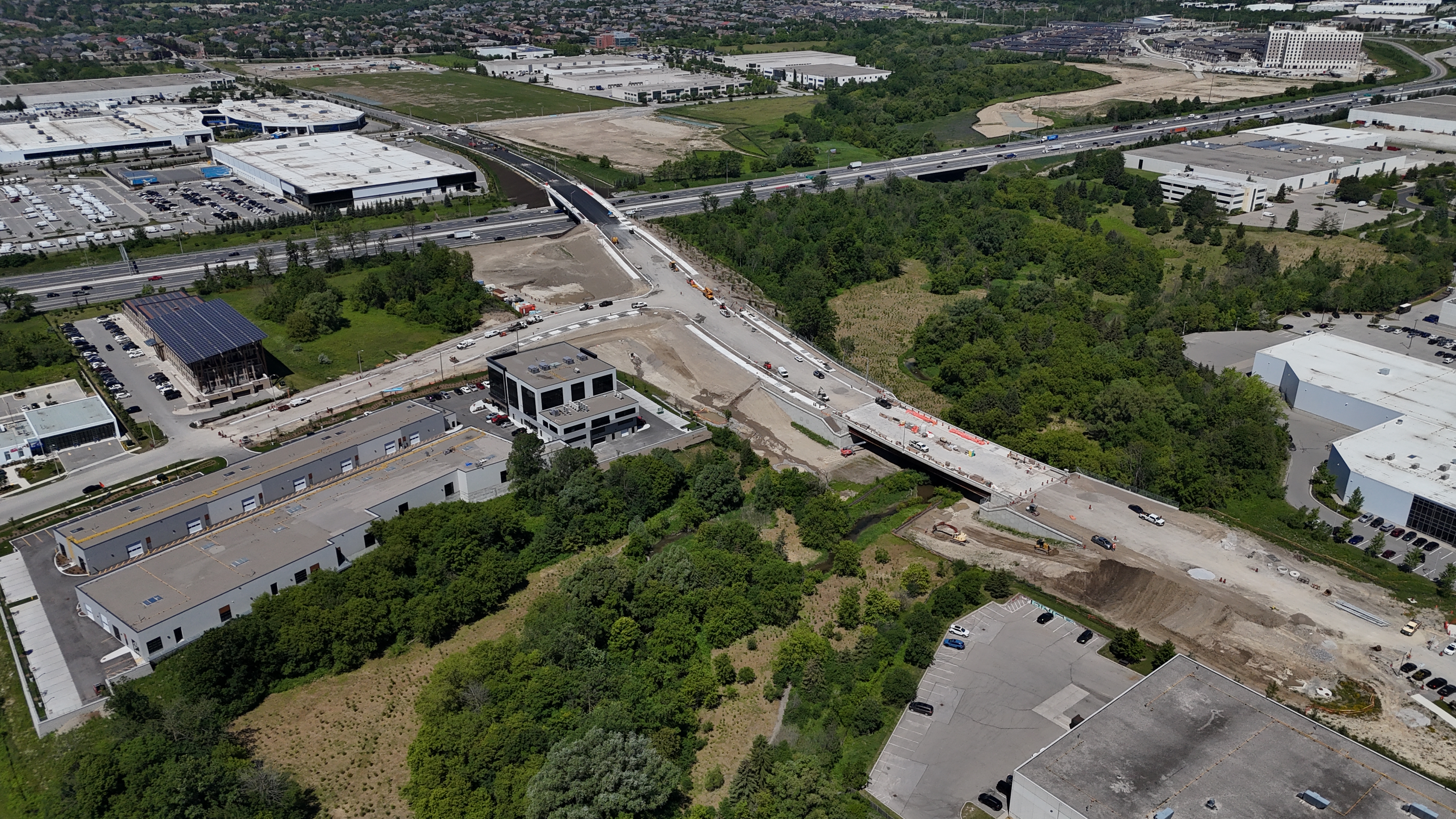
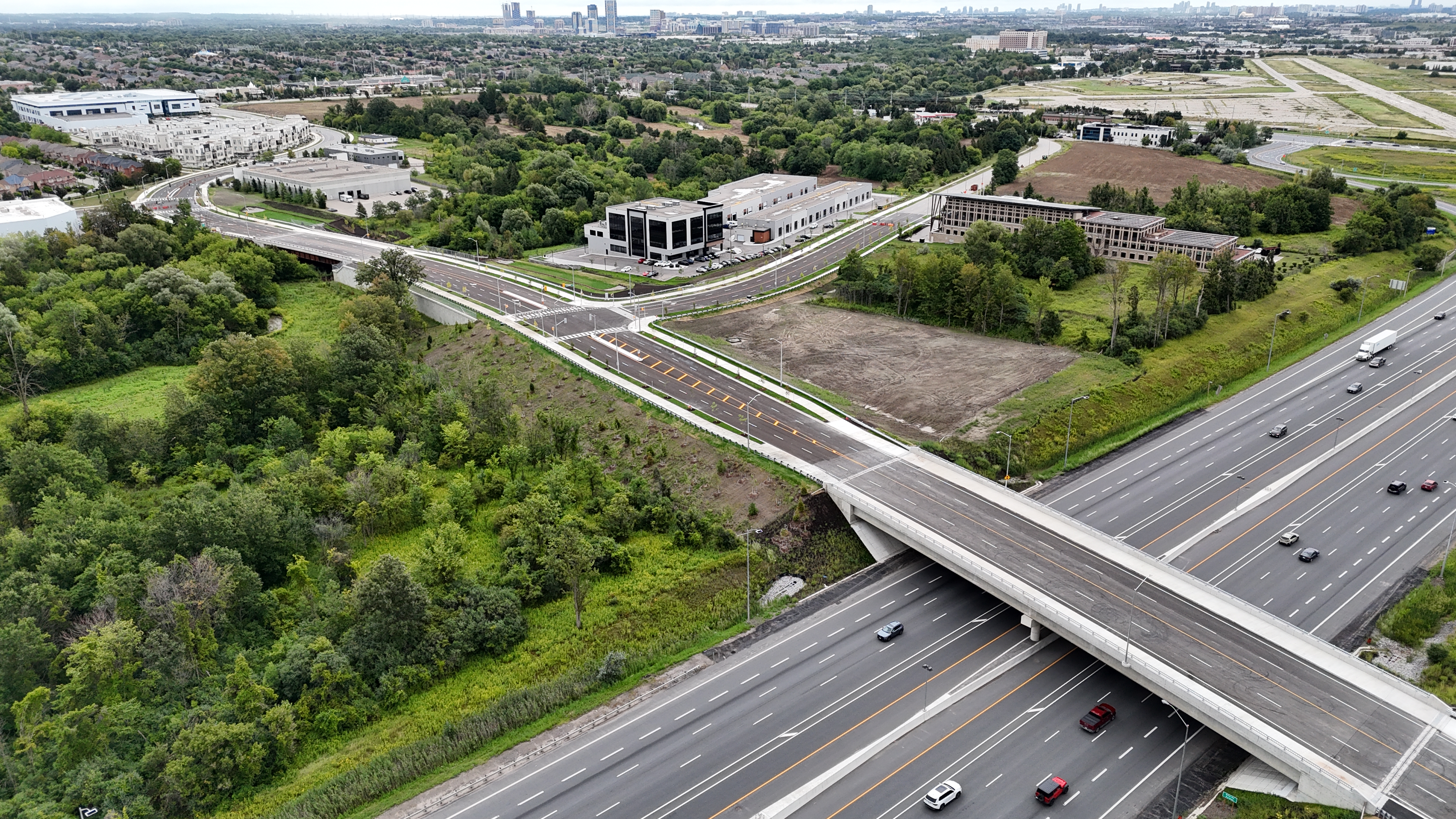
The project involved constructing a crossing north of 16th Avenue, extending from Leslie Street to Woodbine Avenue, and a crossing of the Rogue River. For the growing cities of Richmond Hill, Ontario and Markham, Ontario, this new link improves connectivity, reduces congestion, and supports future regional growth. Environmental improvements were also made with the planting of 10,000 trees and shrubs that will stabilize and naturalize the Rogue River. Additionally, the installation of multi-use pathways provides new opportunities for the community to safely walk and cycle across the highway. The work encompassed:
- site preparation
- asphalt milling
- earth excavation
- grading
- asphalt paving
- construction of two bridges (including steel and prestressed concrete girder installations)
- granular material placement
- concrete curb and gutter installation
- storm sewer and watermain installation
- illumination
- traffic signals
- pavement markings
- permanent signage installation
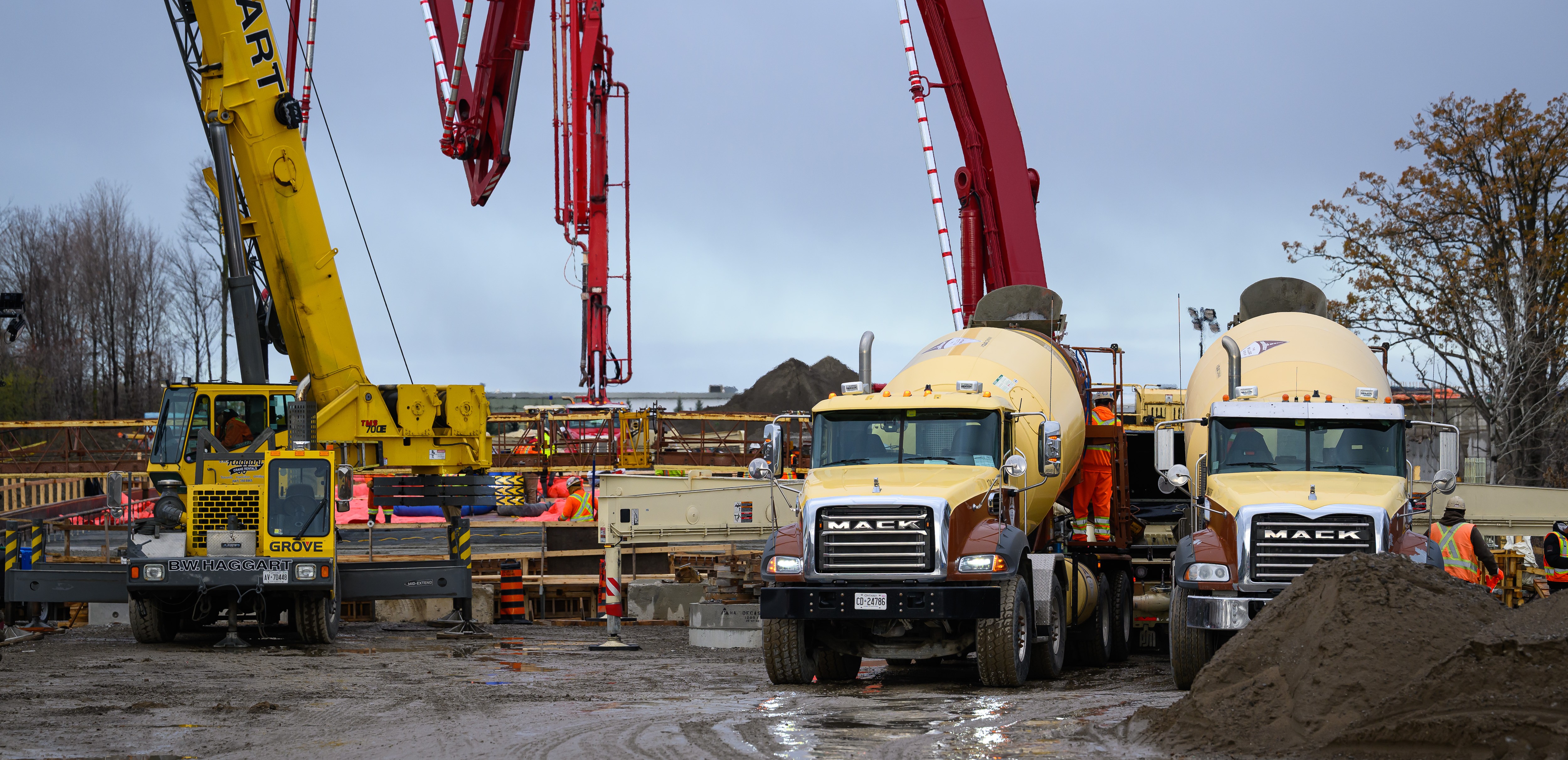
The project spanned four municipalities and authorities; York Region, Ontario Ministry of Transportation, City of Markham, and City of Richmond Hill, each with distinctive and exclusive specifications. This required innovative approaches and adaptability to integrate the varied requirements across different segments, ensuring cohesive project execution.
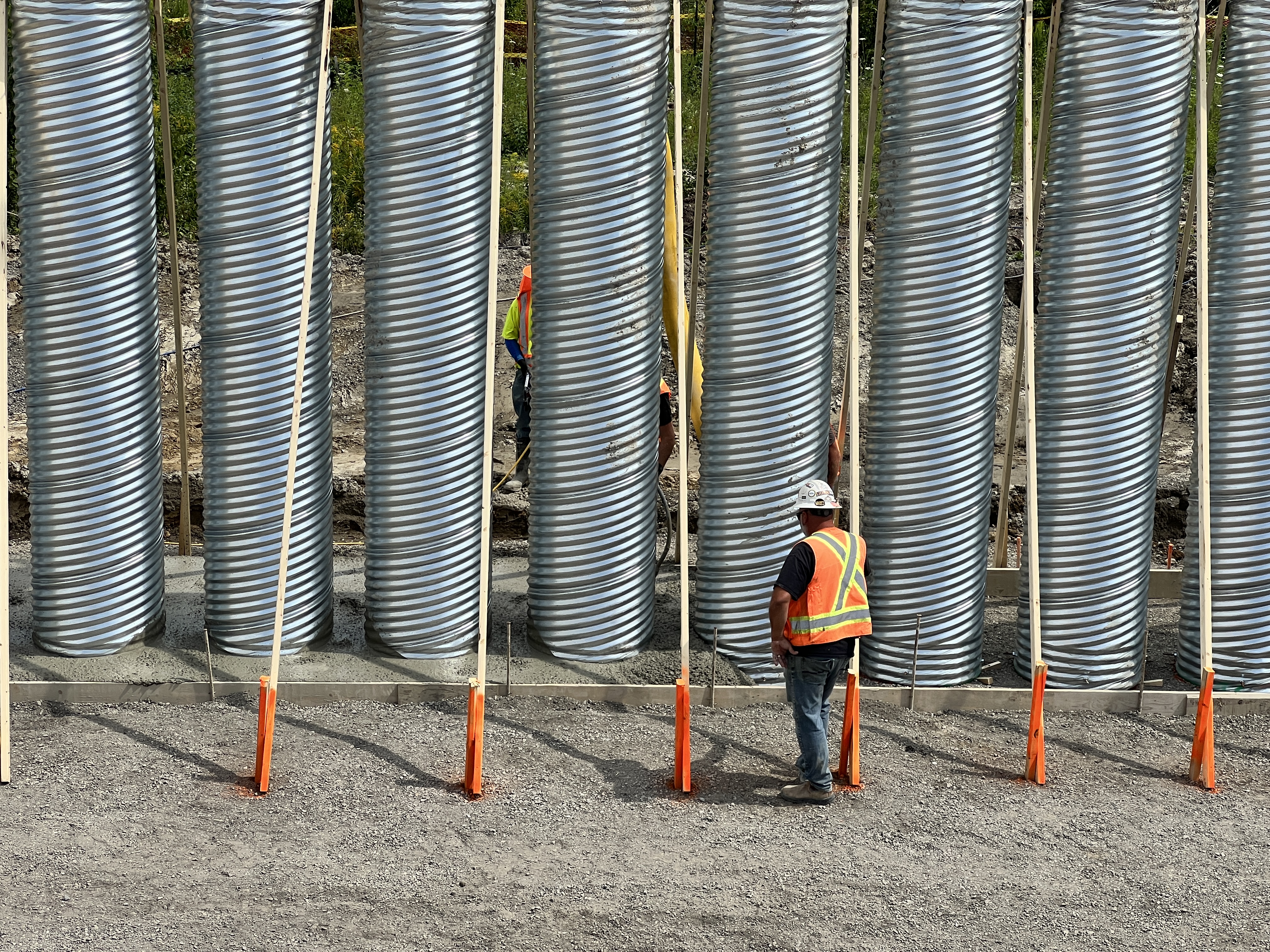
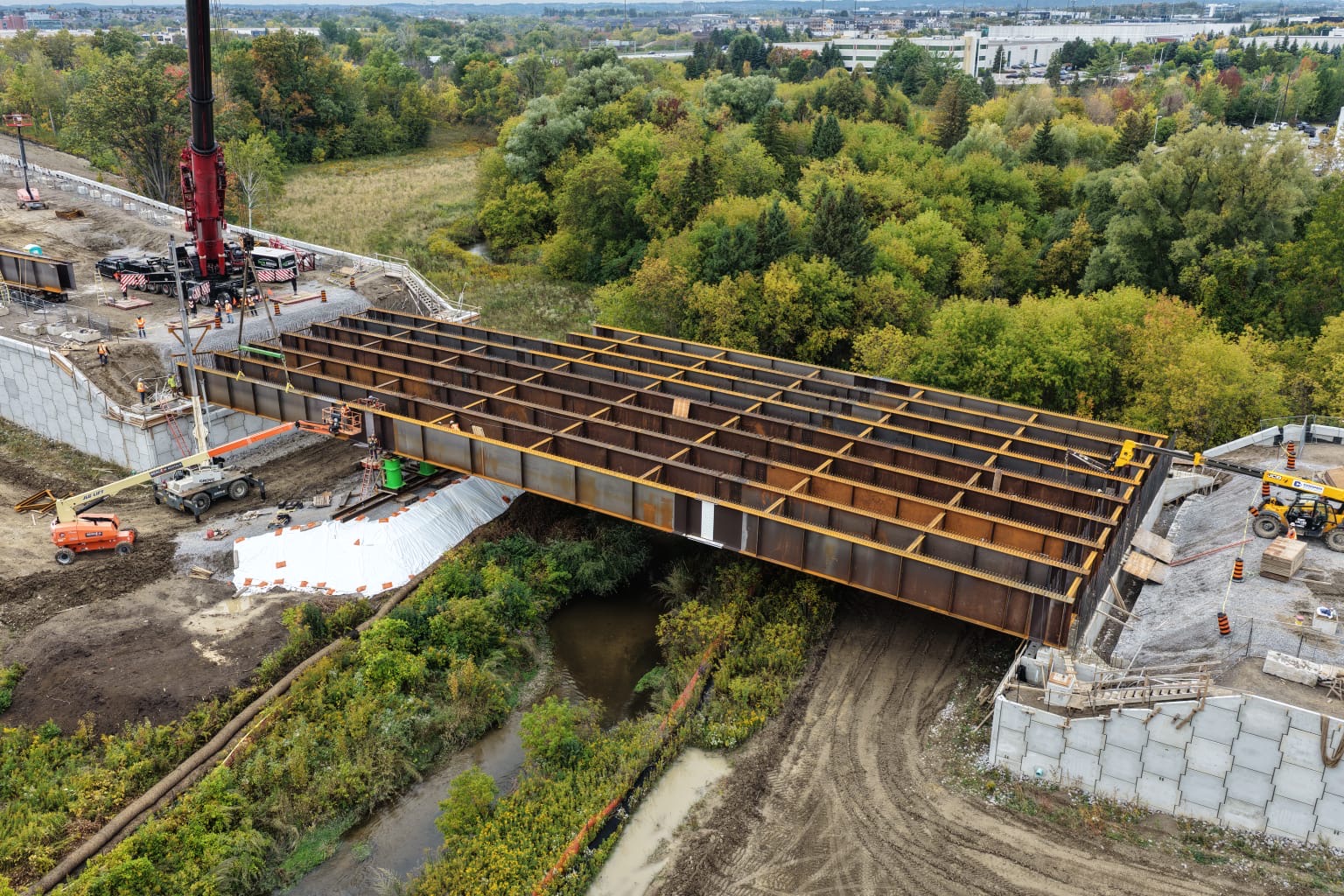
A design change introduced a heat trace system and insulated watermain beneath the Rouge River Bridge, along with stormwater infiltration facilities on both sides of the bridge. These facilities treated and infiltrated runoff water locally to reduce runoff volume and improve water quality. Where concentrated flows must be managed, a major flow outlet ditch safely conveys the excess water. Additionally, a flow spreader at the ditch outlet or discharge point transformed the concentrated flow into a sheet flow, protecting downstream soils and the 10,000 newly planted trees and shrubs. This promoted further infiltration and prevented the formation of erosive channels.
Although these modifications had the potential to cause significant schedule delays, the team successfully minimized its impact on the project timeline through resource leveling and schedule compression.